Saturday, April 15, 2006


Today we pass Da Nang on the way back to Hue.
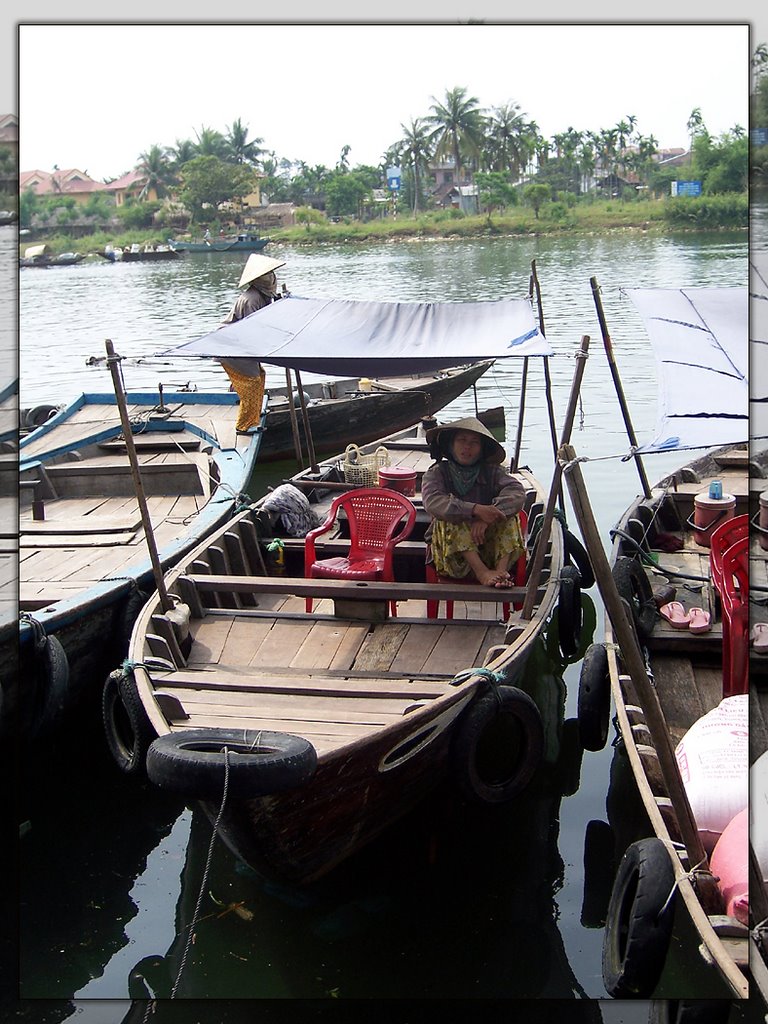
A very unique shape of boat (like a round basket) at Da nang

Friday, April 14, 2006


Restaurants near the river at night.

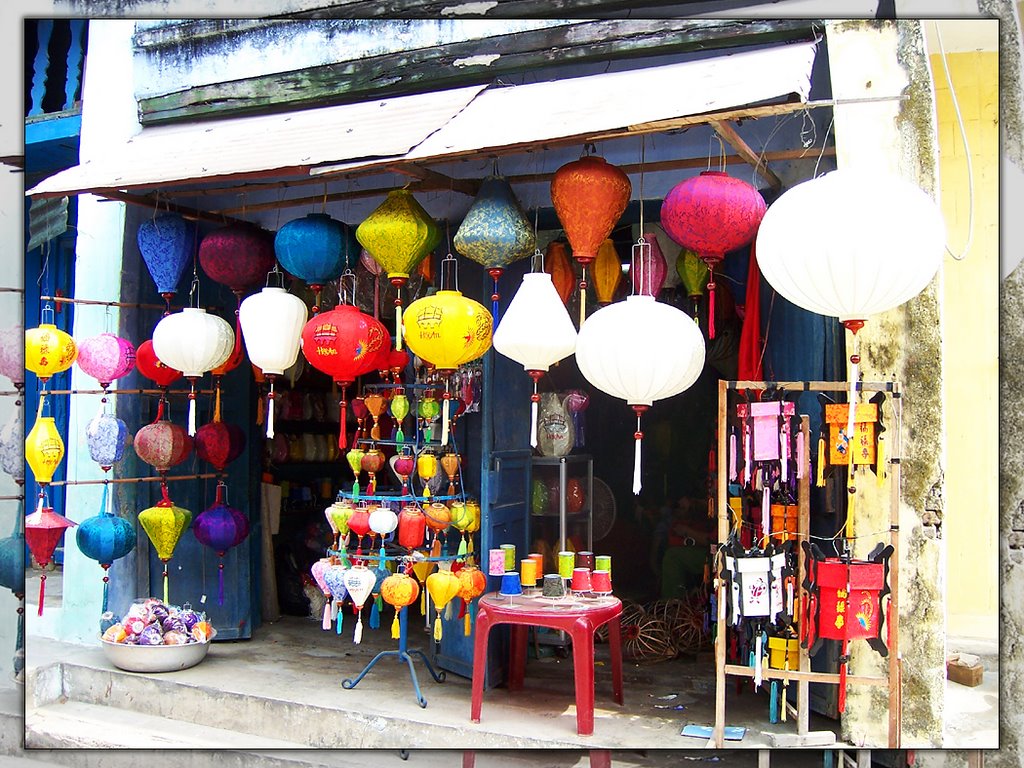
One of Hoi An local products.

Phuc Kien Assembly Hall
Set up in 1757 by Chinese Phuc Kien merchants at Hoi An, the building has been repaired and renovated many times. Phuc Kien Assembly Hall is used for genies and ancestors worship and a meeting place of the Chinese Phuc Kien people as well.

Way of Life.


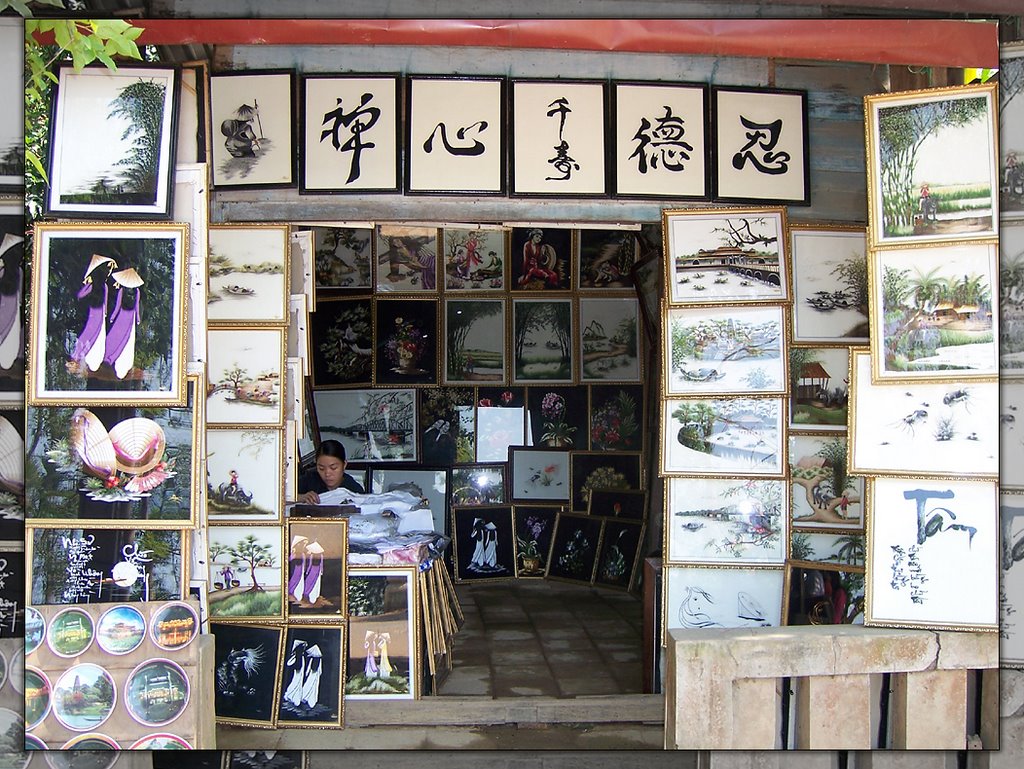
This old city is full of galleries, caring all kinds and sizes of paintings.


Lantern making
When in Hoi An one will see many silk lanterns hanging outside shops. It is interesting to see the dexterity of the lantern makers.

There are about 30 families working lantern in Hoi An. They have to use the old bamboo soaking ten-day in salt water against wormhole and moth then drying it and sharpening it as the size of lantern. Cloth must be silken or nylon cloth, enough toughs for stretching and stretching worker need good technique to do it.

Hoi An lantern is various in size and shape, from normal lantern to dragon lantern or fish lantern with full of color. Hoi An people highly pride on their lantern.

After walking for some hours we chill out in this nice decorated café.

Chua Cau – The Japanese Covered Bridge
Consisting of two different structures, a pagoda (actually more a shrine than a pagoda) and a covered bridge, the monument spans a litle stream. Built at different times by Hoian talented workmen, Chua Cau retains a harmony of architectural styles, combining Chinese, Vietnamese, Japanese cultural characteristics. The two entrances of the bridge are guarded by a pair of dogs on one side and monkeys on the other.


Being a UNESCO World Heritage place, Hoi An's old centre is considered as a whole when visiting. It is so easy to get around on foot and there is little traffic to be concerned about.

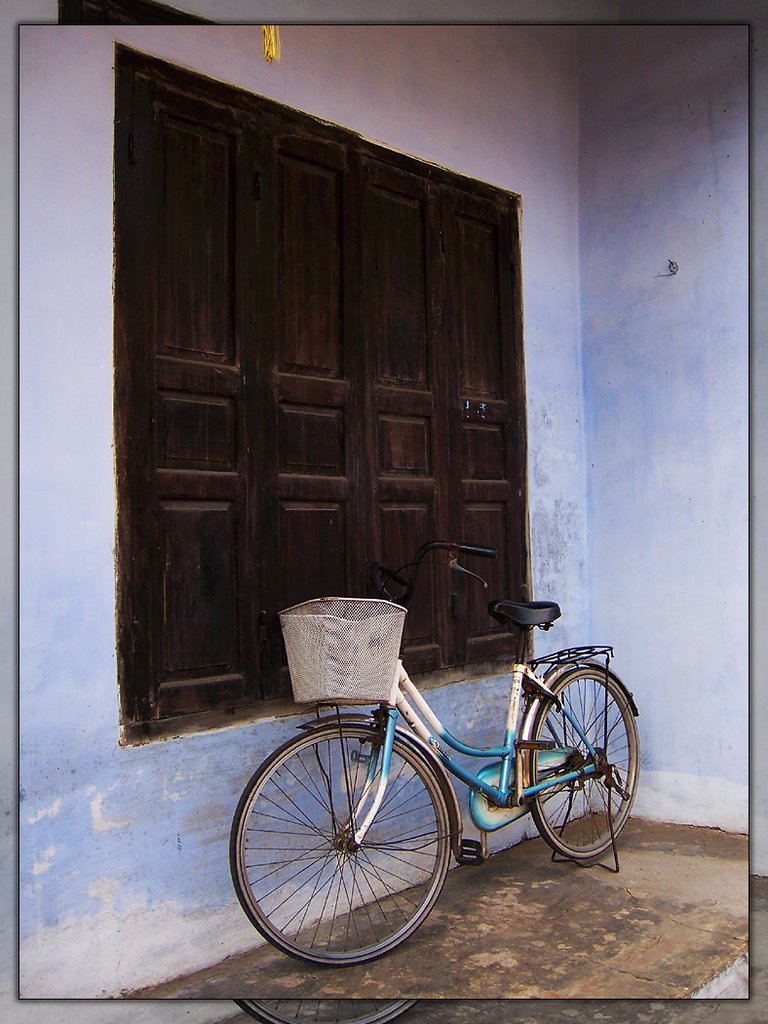
A common transportation for Hoi An people.

Cyclo, a traditional transportation in Vietnam.


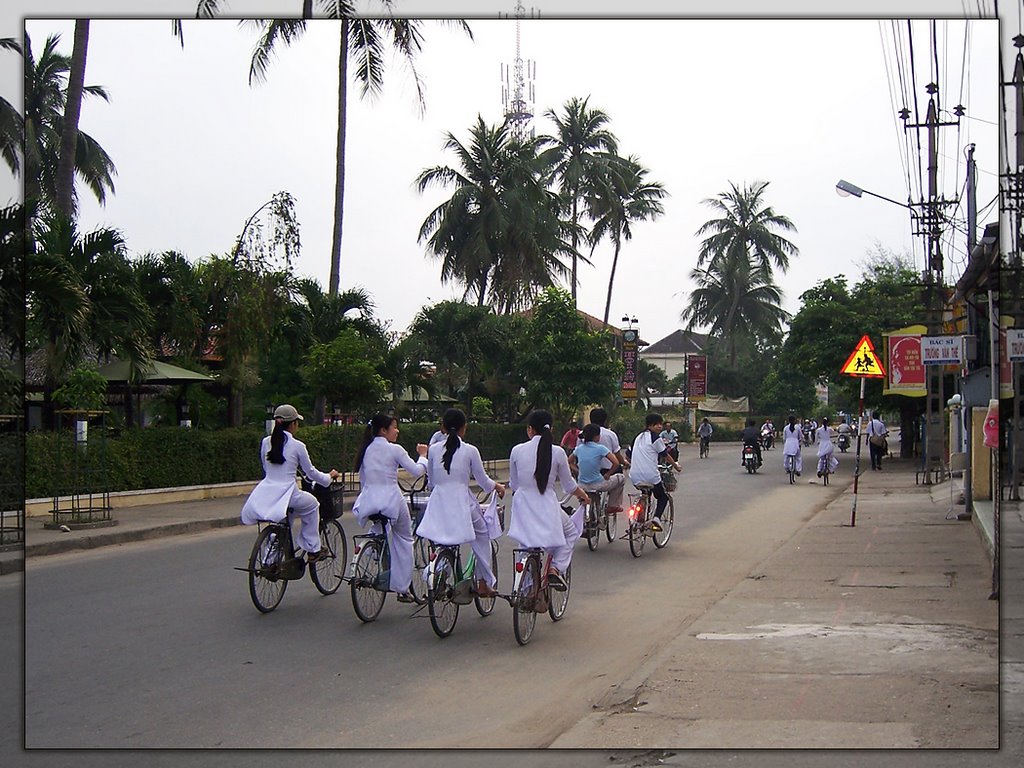
Students in their white uniforms.

Hoi An is an old town down the Thu Bon River, on the coastal plain of Quang Nam Province, about 30 km south of Danang. Much of the city’s commerce still revolves around the rivers flow.

Thursday, April 13, 2006


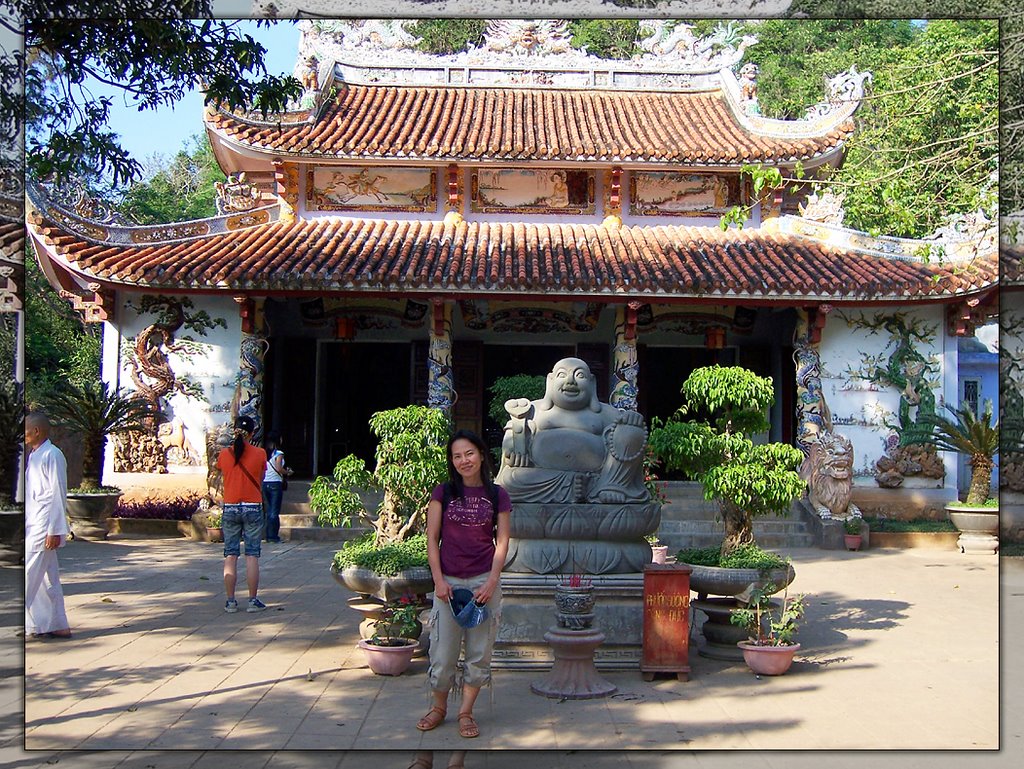
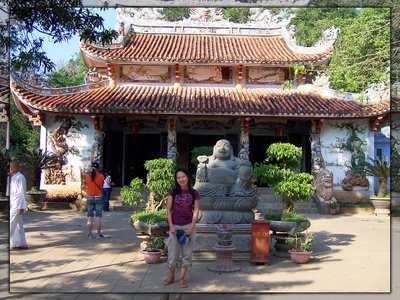
A Temple at Marble Mountain overlooking Danang.

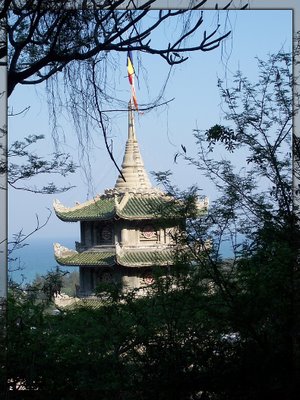
Marble Mountain comprises of five peaks named each after an element - water, earth, metal, fire and wood, the mountains are replete with caves and secret passages containing Buddha images and shrines.

This mountain is so named because it is excavated for marble. There are many workshops and factories nearby which make marble sculptures and furniture. There are Buddhist temples and interesting caves at the top.


This famous restaurant provides delicious food that we visit one more time on the way back home.

Ngo Mon Gate is the main entrance to the imperial city.

The Citadel
The Citadel was the imperial palace form the early nineteenth century until the mid-twentieth century. Emperor Gia Long, who ruled Vietnam form 1802 to 1819, based it on the Forbidden City in Beijing. Many of the palace buildings were destroyed during the Tet offensive of 1968, when the Vietcong and NVA held out here for 24 days, but it is still a very impressive place. It is a UNESCO World Heritage site and restoration work is taking place.

On both side of the courtyard, two rows of Mandarin statues are facing towards the court center.

Khai Dinh Mausoleum

The biggest dragon in the country forming the side walls.

The rear room of the Khai Thanh palace constitutes the main temple, which contains the statue of Khai Dinh, his grave and his altar.


Local craft souvenir shop at the bottom of the temple.

People at Hue and Hoi-an are much nicer than those in the northern part of the country.

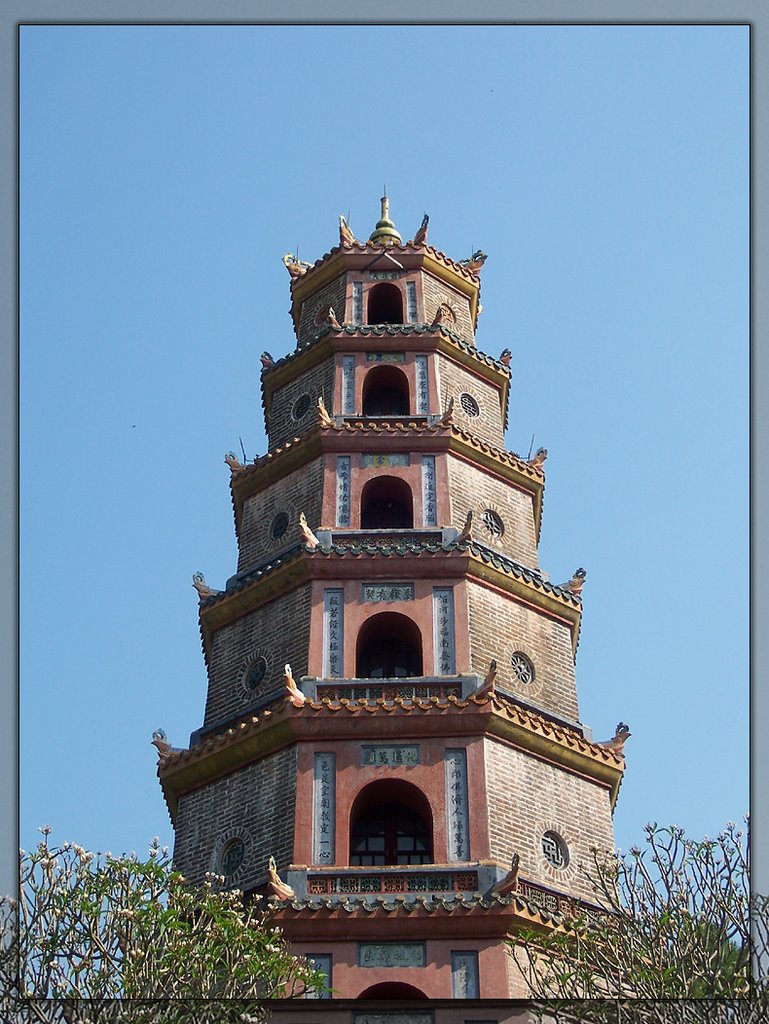
Thien Mu Pagoda
The 'Pagoda of the Heaven Lady' was built by Lord Nguyen Hoang in 1601. The pagoda is situated on the left bank of the Perfume River in Huong Long village, 5km from the central of Hue city. The octagonal tower was built during renovations in 1844.

The Perfume River

There are steps lead right from the water up to the pagoda.

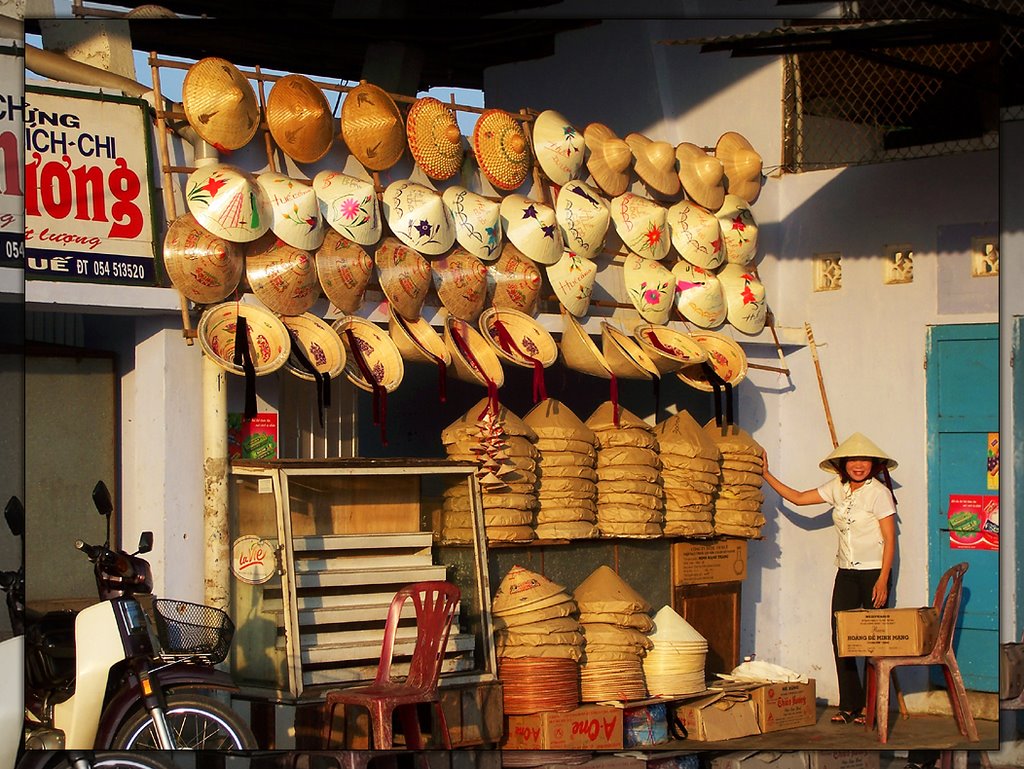
Conical palm leaf hats at Dong Ba Market, Hue

Hue originally called Phu Xuan was built in 1687 and became the capital of Vietnam under the Nguyen Dynasty. During that time it was the cultural, religious and economic center of Vietnam.

Wednesday, April 12, 2006


We visit a Laos temple before proceed to Vietnam border.

Thai Immigration Office

After we go through Thai immigration office, we then take a boat to cross border to Laos.

Friday, April 07, 2006


At the Elephant reintroduction ceremony with Pang Deun and Pang Daow, mother and daughter who will be released to the wild at Sublangka, Lopburi Province.

Monday, April 03, 2006


Get together at "Nam Kiang Din" restuarant after casting our votes of the election.

Sunday, March 26, 2006


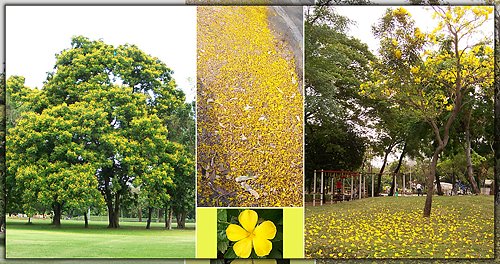
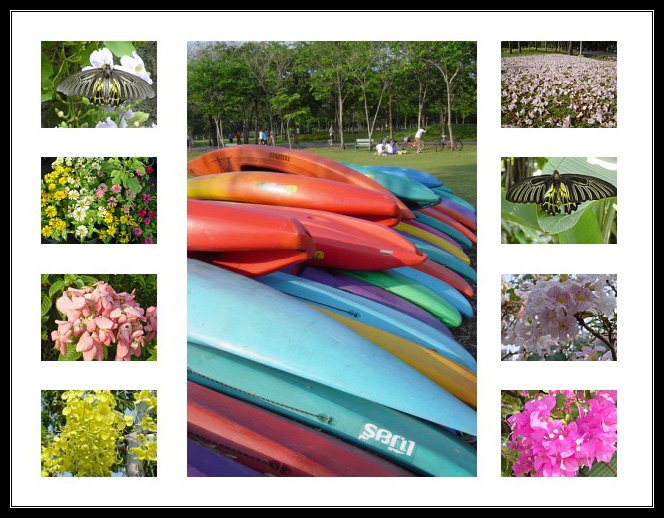
This week the color of flower at the park has been changed from pink to yellow with the blossom of "Copper Pod Tree" or "Yellow Flame Tree" or นนทรี in Thai. (the left picture)

The right picture is another yellow flower at the park. It is the "Silver Trumpet Tree" or เหลืองปรีดิยาธร in Thai, another Tabebuia argentea (Same family, Bignoniaceae, with the Pink Trumpet Tree). Tabebuia is a genus containing around 100 species.

There is a traffic learning center for children at the Park.

My second Sunday morning at Suan Rod Fai or Wachirabenjathas Park.

Sunday, March 19, 2006


Namphong is so kind that she went to buy next trip ticket for us though she can't join the trip.
Khun Noom names our very big dessert appetite as a "fat to fat" trip which a very heavy exercise will soon be needed for all of us.

Lunch at Kuppa Cafe.
Pe Paew in her new dress, for which she prepares for the hot weather during her Egypt trip.
Ta is very kind to bring the guide book for our next trip.

Sunday, March 12, 2006


K. Mer calls me that Tabebuia Rosea (Bertol) DC. or the "Pink Trumpet Tree" (ชมพูพันธ์ทิพย์ in Thai) is blooming at the park.


At Suan Rod Fai.
 
eXTReMe Tracker